
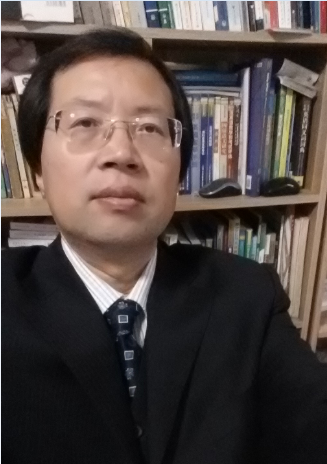
职称:教授
研究领域:应用语言学、第二语言写作、语篇分析和翻译研究
上海海事大学外国语学院英语教授,外国语言学及应用语言学硕士生导师。1990年获陕西师范大学英国语言文学专业学士学位,2003年获复旦大学外国语言学及应用语言学专业硕士学位,2007年获澳大利亚昆士兰科技大学哲学博士学位,2012年5月-2013年5月作为高级研究学者赴美国亚利桑那州立大学访学,2018年8月-2019年8月获国家留学基金委资助赴英国伯明翰大学访学。曾先后赴美国、英国、加拿大、澳大利亚、新西兰、新加坡、葡萄牙、法国等国考察学习和参加学术会议交流。
主要研究方向:
应用语言学、第二语言写作、语篇分析和翻译研究。
主要专著:
[1] Mu, C. (2020). Understanding Chinese Multilingual Scholars’ Experiences in Writing and Publishing in English. London: Palgrave McMillian.
以下为有关该书的书评:
1) Bing, L. (2022). Journal of English for Research Publication Purposes, 3(2),246–251;
2) Dong, Y. (2022). Journal of Second Language Writing, 55, 1-3;
3) Wu, S., & Liu, X. (2022). Journal of English for Academic Purposes, 55, 1-2;
4) Zhang, X., & Yang, H. (2021). System, 99, 1-3.
[2] Mu, C. (2007). Second Language Writing Strategies. Brisbane, Australia: Post Pressed.(ISBN 978-192
主要译著:
[1] 穆从军,(2020),《美国人》,北京: 人民文学出版社
[2] 穆从军. (2018).《剑桥科幻文学史》,天津: 天津出版传媒集团、百花文艺出版社.
[3] 穆从军等. (2016).《玄幻故事集》,北京: 人民文学出版社.
[4] 穆从军. (2016).《拉美科幻文学史》,天津: 天津出版传媒集团、百花文艺出版社.
主要学术论文:
[1] 穆从军. (2023). 读后创写思辨能力培养模式及其有效性研究。《外语教学与研究》,55(2), 225-237. (CSSCI-indexed)
[2] 穆从军. (2023). 中外期刊英文摘要各语步的元话语名词功能对比研究。《外语学刊》,(2), 34-41. (CSSCI-indexed)
[3] 田玉翠、穆从军. (2022). 翻译规范理论视角下中外航运英文报告立场标记语对比研究。《中国ESP研究》,28(3), 104-112.
[4] 穆从军、张文洁. (2022). CLiC在线语料库资源在文学教学与研究中的应用。《外语与翻译》,29(3), 71-77.
[5] Wang, X., Mu, C., Li, H., Noble, A., & Wang, Q. (2022). Product-Centered Language Style in Chinese Women Online Reviews. Front Psychol, 13, 1-10. (SSCI-indexed)
[6] Mu, C. (2021). A multidimensional contrastive analysis of linguistic features between international and local biology journal English research articles. Scientometrics, 126(9), 7901-7916. (SSCI-indexed)
[7] 穆从军, (2019),互文性视域下的英汉学术论文文献引用形式和修辞功能对比。《青海师范大学学报》,41(6), 116-124.
[8] 穆从军、张军、John Ehrich、洪化清, (2019). 也谈英汉学术语篇元话语对比中的语料库定量研究方法—兼向蔡基刚教授请教与商榷。《浙江外国语学院学报》,(2), 77-82.
[9] Mu, C. & Zhang, L.J. (2018). Understanding Chinese multilingual scholars’ experiences of publishing research in English. Journal of Scholarly Publishing, 49(4), 397-418. (SSCI-indexed)
[10] 钱家骏、穆从军. (2017). 跨语言学术交际的主体间性--英汉学术期刊论文引言语篇模式与介入资源对比.《西安外国语大学学报》,25(4), 13-17. (CSSCI-indexed)
[11] 钱家骏、穆从军. (2017). 中外学者学术论文写作立场表达强度和方式比较.《解放军外国语学院学报》,40(5), 29-37. (CSSCI-indexed)
[12] 谭华、穆从军. (2017). 中外学术期刊论文英文摘要的语篇结构和语言特点比较.《江苏外语教学研究》,2, 77-82.
[13] Mu, C. (2017). Critical and Corpus-based Approaches to Intercultural Rhetoric [Book Review]. The Journal of Asia TEFL, 14(1), 207-208. (SCOPUS-indexed)
[14] Mu, C. (2016). Discourse analysis in teaching English text. In M. F. Alexandre & C. A. M. Gouveia (Eds.), Theory, Application, Analysis: Studies in Systemic Functional Linguistics (pp. 267-277). Lisbon: BonD & CELGA-ILTEC.
[15] 穆从军. (2016). 英语专业学生写作思辨能力调查.《现代外语》,39(5),693-703. (CSSCI-indexed)
[16] 穆从军. (2016). 修辞结构理论视角下英汉学术论文摘要的修辞关系对比研究.《现代外语》,39(1),97-107. (CSSCI-indexed)
[17] Ehrich, J., Howard, S., Bokosmaty, S. & Mu, C. (2016). A Comparison of Chinese and Australian University Students’ Attitudes to Plagiarism: A Rasch Analysis. Studies in Higher Education, 41(2), 231-246. (SSCI-indexed)
[18] Mu, C. & Matsuda, P. K. (2016). Replication in L2 writing research: JSLW authors’ perceptions. TESOL Quarterly, 50, 201-219. (SSCI-indexed)
[19] Mu, C., Zhang, L., Ehrich, J. & Hong, H. (2015). The use of metadiscourse for knowledge construction in Chinese and English research articles. Journal of English for Academic Purposes, 20, 135-148. (SSCI-indexed)
[20] 穆从军. (2015). 20世纪80年代以来的ERPP写作研究:回顾与展望.《外语界》,1,56-64. (CSSCI-indexed)
[21] Mu, C. (2015). Writing and Publishing Science Research Papers in English: A Global Perspective [Book Review]. English for Academic Purposes, 39, 76-78. (SSCI-indexed)
[22] 陆元雯、穆从军. (2014). 第二语言写作教学与研究-- Paul Kei Matsuda教授访谈录. 《当代外语研究》,8,46-47.
[23] Ehrich, J., Zhang, L., Mu, C. & Ehrich, L. (2013). Are alphabetic-language derived models of L2 reading relevant to L1 logographic background readers? Language Awareness, 22(1), 39-55. (SSCI-indexed)
[24] Mu, C. (2013). Replication Research in Applied Linguistics [Book Review]. Studies in Second Language Acquisition, 35, 763-766. (SSCI-indexed)
[25] Mu, C. (2013). Stance and Voice in Written Academic Genres [Book Review]. Journal of Second Language Writing, 22, 481-483. (SSCI-indexed)
[26] 穆从军、郭黎波. (2012). 第38届国际系统功能语言学大会在里斯本召开[会讯].《当代语言学》,2,218.
[27] Mu, C. (2012). Using hermeneutic multi-case study to investigate L2 students’ academic writing strategies. The Linguistics Journal, 6(1), 81-103.
[28] Mu, C. & Liu, J. (2011). Exploring professional attributes of being a qualified Chinese interpreter in the field of exhibition and convention. Asian ESP Journal, 7(1), 146-167.
[29] 穆从军. (2010). 中英文报纸社论之元话语标记对比分析.《外语教学理论与实践》,4,35-43. (CSSCI-indexed)
[30] Mu, C. (2010). “I only cited some of his words”: The dilemma of EFL students and their perceptions of plagiarism in academic writing. The Journal of Asian TEFL,7(4), 103-132. (SCOPUS-indexed)
[31] Mu, C., & Liu, L. (2010). English translation of Chinese dish names. Translation Journal, 14(4), 1-16.
[32] Mu, C. (2009). A multi-prism look at audience awareness of Chinese students’ English writing. STETS Language and Communication Review, 8(1), 9-18.
[33] Mu, C. (2007). A proposal for a taxonomy of ESL writing strategies. STETS Language and Communication Review, 6(1), 5-13.
[34] Mu, C. (2007). An investigation of three Chinese students’ writing strategies. TESL-EJ, 11(1), 1-23.
[35] 穆从军. (2007). 国外对比修辞研究发展四十年综述.《修辞学习》,5,21-25. (CSSCI-indexed)
[36] 高翔、穆从军. (2002). 关于培养复合型、应用型外语人才的思考.《外语界》,88 (2), 10-13. (CSSCI-indexed)
[37] Mu, C. (2002). Can Chinese students’ writing skills be successfully transferred into English writing? Teaching English in China, 25 (2), 30-32.
主要会议论文:
[1] Mu, C. (April 12-14, 2019). Exploration and Transformation: Strategies Chinese Multilingual Scholars report using while publishing in English. The BALEAP Conference 2019 at University of Leeds, UK.
[2] Mu, C. (Sept.6-8, 2018). Voice in academic writing: The rhetorical construction of author identity in Chinese and English research articles. The 51th annual meeting of the British Association of Applied Linguistics at York St John University.
[3] Mu, C. (June 4, 2018). 学术发表英语(ERPP)研究的理论、方法和发展趋势(invited talk). 上海立信金融学院.
[4] Mu, C. (June 4, 2016). English for research publication purposes:Disentangling the occluded genre (invited talk). 复旦大学外国语言文学学院和复旦大学出版社联合举办的第四期大学英语教师研修班。
[5] Mu, C. (May 28, 2016). Bridging the gap between language proficiency and cognitive growth:A putative model for training students’ critical thinking in academic English writing (invited plenary speech). Presented at the 1st International Symposium on EAP in Asia & the 2nd China EAP Association Annual Conference at Fudan University, Shanghai.
[6] Mu, C. & Zhang, LJ. (Nov. 19-21, 2015). An intercultural-rhetoric perspective on ERPP writing by Chinese scholars. Paper presented at the 14th Symposium on Second Language Writing at Auckland University of Technology, Auckland, New Zealand.
[7] Mu, C. (9 June, 2014). Critical thinking and intercultural academic writing (invited talk). Presented at Shanghai Business School.
[8] Zhang, LJ., & Mu, C. (29 November, 2014). A comparative study of metadiscourse use in Chinese and English research articles. Paper presented at 19th Symposium of the Applied Linguistics Association of New Zealand (ALANZ 2014), Auckland.
[9] 穆从军, (Nov. 22-24, 2013),“形合还是意合?英汉学术论文摘要修辞结构对比研究”,首届英汉对比与翻译研究中青年博士论坛,上海海事大学,上海,中国。
[10] Mu, C. (March 1, 2013). An investigation of the critical thinking quality in Chinese EFL students’ English academic writing. Paper presented at the 19th Annual Graduate Linguistics/TESOL Symposium at Arizona State University, Tempe, USA.
[11] Mu, C. (July 25-29, 2011). A contrastive study of English and Chinese journal paper abstracts: RST analysis. Paper presented at the 38th International Systemic Functional Congress at University of Lisbon, Portugal.
[12] Mu, C. (May, 2008). “Using Nvivo in teaching English Text”. Paper presented at the International Symposium on Educational Technology at Yantai University, Shandong Province, China.
[13] Mu, C. (September, 2007). “Are they reader responsible writers or writer responsible writers?”. Paper presented at the Symposium on Second Language Writing 2007, Nagoya, Japan.
[14] Mu, C. & Ehrich, J. (May, 2007). “Chinese words and English words: A set of norms for sentence processing”. Paper presented at the 5th China Cognitive Linguistics Conference at Hunan University Changsha, China.
[15] Mu, C. (July, 2006). An investigation of the writing strategies three
Chinese post-graduate students report using while writing academic papers in English. Paper presented at the ALAA congress, at UQ, Brisbane, Australia.
[16] Mu, C. (June, 2005). A taxonomy of ESL writing strategies. Paper presented at the Singapore International Conference of Pedagogy Design: Theory, Policy and Practice, NIE, Nanyang Technological University, Singapore.
[17] Mu, C. (May, 2001). “Lexical error analysis in non-English major students' writing”. Paper presented at the 3rd International Symposiums on ELT in China, Beijing, China.
主持及参与研究项目:
[1] 主持国家社科基金项目—跨文化修辞视阈下中国学者英语学术期刊论文写作与发表研究(14BYY151)。(结项等级:良好)
[2] 参与国家社科基金项目—英、汉原型情绪的概念化研究(17BYY041)。
[3] 参与教育部人文社科基金项目—英汉话语修辞-句法界面的对比研究---以结构性话语标记为平台(12YJA740109)。(已结项)
[4] 北京外国语大学中国外语教育研究中心第五批“中国外语教育基金项目”—对比修辞与英语写作策略研究(ZGWYJYJJ
[5] 上海海事大学社科基金项目—英汉语学术论文中元语篇的比较研究(2010)。(已结项)
[6] 上海市教委科技创新基金项目—英汉对比修辞与英语写作策略研究(09YS400)。(已结项)
[7] 上海应用技术学院社科基金项目—英汉语学术论文中元语篇的比较研究(SJ2008-01)。(已结项)
[8]上海应用技术学院重点建设课程—职业需求与语言交际能力(M07058)。(已结项)
[9] 上海应用技术学院高地项目—会展英语翻译人才培养模式探索(SYG0701-27)。(已结项)
[10] 上海应用技术学院教学改革项目—认知方式和英语写作之间关系的定量定性研究(P06032)。(已结项)
主要奖项:
[1] 获2020年度上海海事大学“刘浩清”教育优秀奖师资培养三等奖
[2] 获2017年度上海海事大学优秀研究生导师荣誉奖励。
[3] 获2016年度上海市第十三届哲学社会科学优秀成果二等奖。
[4] 获2016年度上海海事大学科技成果二等奖。
[5] 获2015年度上海海事大学“刘浩清”教育优秀奖师资培养三等奖。
[6] 获2015年度上海海事大学优秀教育工作者荣誉奖励。
[7] 获2013年度上海海事大学学术论文奖一等奖。